Dec 07, 2025
 3 min read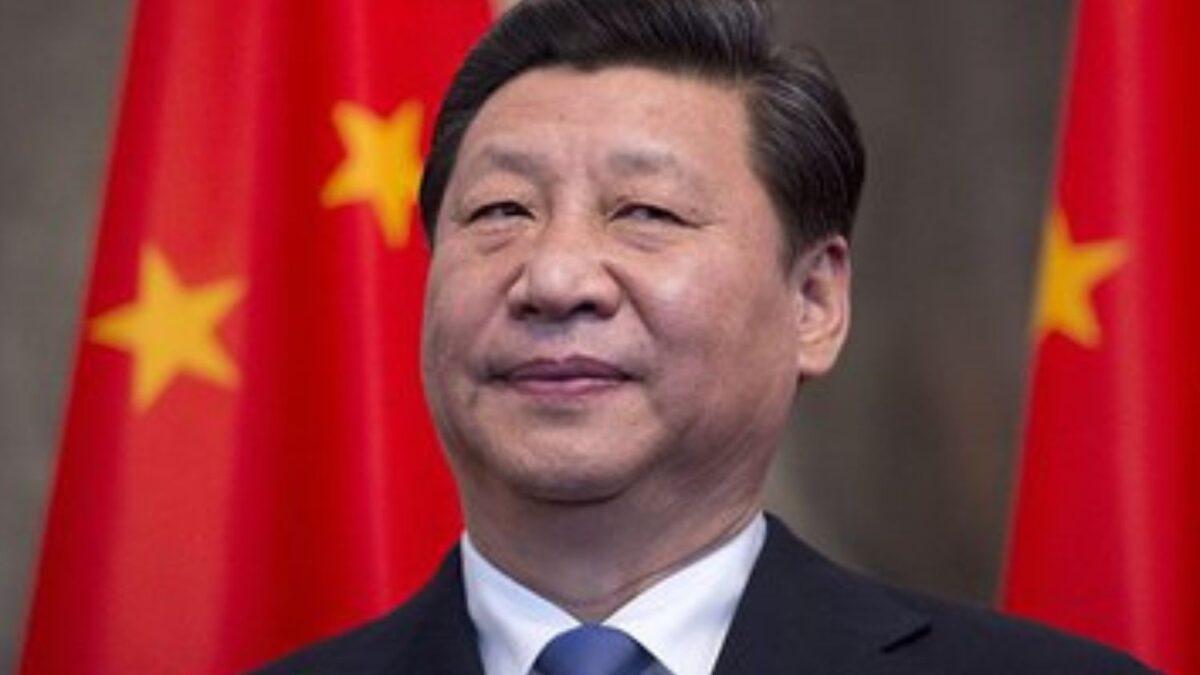
The document was published by the Australian Strategic Policy Institute (ASPI CommureMals and Commial Palls, How to strengthen online content and control tensors in cities,
According to reports, smart tools to track people are more granular and require less effort.It will make the government more efficient.Instead of working only after the protest or after.The system tracks risks and organizes them before protests occur.
For authors, AI is no longer a technical aid and begins to act as the basis of a new model of author management, which can integrate online and external data in real time.
Huge investments and institutional support
Beijing has invested hundreds of millions of dollars in research, development and the use of smart applications.This comes despite attempts by the United States to curb exports of high-end chips to China.
The technology also has clear political support.President Xi Jinping has already said that AI brings "challenges and opportunities for the management of Cyberspace" - according to ASPI, which will act as a justification for the maintenance of stability and stability in the maintenance of the regime and stability.
Interestingly, the Chinese population shows optimism. An Ipsos global survey in 2024 showed that the Chinese are more enthusiastic about AI than the citizens of 32 other countries.
From the Streets to the Courtroom: Artificial Intelligence in the Justice System
One of the most sensitive issues in the report concerns the use of artificial intelligence in the criminal justice system.In some areas, the technology is already appearing at all levels: police, trials and prisons.
Vigilance begins on the street.Estimates cited in the study show about 600 million cameras spread across the country - the equivalent of almost three cameras for every seven people.Most of them already use facial recognition, location tracking and behavioral analysis.
In Shanghai, official documents describe plans for cameras and drones that "intelligently detect and enforce the law," automatically alerting police to crowds.
In the courts, China's Supreme Court ordered everyone to develop AI systems that can help with sentencing and administrative processes by 2025. In some places, algorithms are already recommending whether a suspect should be arrested or given a substitute sentence.
In prisons, the concept of "smart prisons" is emerging.The fronts of the summary have systems that analyze systems in rehabilitation centers to find signs of anger or stress and AI-ARSURSual Rearendes therapy.
Efficiency or political oppression?
Proponents of the use of smart technology say that these technologies help prevent crime and increase security.But experts warn of the dangers of the brand.The Chinese Justice system has a majority of over 99%, and answers directly to the Communist Party.
That is, the same knowledge used to prevent crime can be used for political persecution, especially against vulnerable groups.CITS reported Eyacic and practitioners, namely homosexuals, as teachers, as potential targets of the desired research model.
Another sensitive point is the development of large language models in minority languages - UYgur, Tibetan, Mongolian and Korean.According to the researcher, this system can be used to monitor the communication and shape the information this community receives.
China's state of the art
The report also draws attention to the role of China's technology giants. Companies such as ByteDance, Tencent and Baidu have been described as key enablers of digital censorship.
On Douyin (the Chinese version of TikTok), politically sensitive content is automatically removed or downgraded.Tencent uses AI to assign "danger points" to users based on their online behavior.Baidu provides moderation tools and has cooperated with authorities in more than 100 criminal investigations, according to the document.
In addition to complying with regulations, these companies began developing and selling censorship technology, expanding the surveillance ecosystem across the country.
The picture can be spread
The use of AI in China is not only a concern because of its domestic implications.The report warned that the country had become an exporter of surveillance technology.Chinese models - many of them low and low sources - have already attracted expert governments in other regions, such as Iran and Saudi Arabia.
According to experts, the danger of using these systems, countries that abuse the written guide to them: Control, prevention, control and control of information.
Note that the field goes out
The ASP report issues a global warning: Artificial intelligence is not neutral.In a restored political system, it can be taken to increase, sound bites, and transfer better oversight to routines.
As Beijing moves towards full integration into the Government, international negotiations are gaining urgency.The question that remains is how far this concept can grow – and who will be able to set the limits before the technology becomes too banal and difficult to reverse.
[Աղբյուր՝ CNN Brasil]